Some organizations are defined by how long they last, while others are defined by what they leave behind.
Since its founding, the Rotaract Club of Metro Cebu Cebu Institute of Technology – University Chapter has remained at the forefront of student leadership. Now recognized as the oldest running Rotaract club in District 3860, the organization has built a legacy grounded in resilience. This has allowed it to stay consistent in its commitment to serve despite years of challenges.
But how does a student-led organization endure for so long?
In an interview with its President-Elect Christian Enario, we sought to uncover the secret to its longevity, or in Cebuano, “Unsay secreto para magdugay?”
A Legacy Without Archives
Ironically, for a club with such a long history, much of its early story remains unwritten.
“Tungod sa ka old sa club, ang ubang data kay di jud namo ma-pasa from one term to another. Basically, ang ma-recall rajud namo kay the past few years, like 5 years ago,” Enario said, noting that much of the organization’s origin has been passed down through memory and former leaders, to the extent that even the exact founding year and identity of its founder are no longer clearly documented.
Without the luxury of detailed archives, each generation is compelled to rebuild, relearn, and reimagine the organization in its own time.
Despite this, the club continues to grow, with more than 30 officially reported members to Rotary International and an estimated community that stretches far beyond that number. While longevity is a blessing, it also comes with its own set of challenges.
“Ang naka-challenge jud kay ang pagbayad sa dues. Ang main challenge kay ang pag pangita og funds, mao nga kinahanglan mi mag-create og fundraisers para maka-generate og funds nga maibayad sa district dues ug Rotary International dues,” he explained.
Moreover, beyond finances, there is a deeper weight that comes with being the oldest running club in the district.
“It entails responsibility,” he said. “It gives off the energy na other club will look up sa kana na club since it is the oldest one. So in our term naa jud mi responsibility na amo i-maintain ang among image as a club and kana dapat namo dili siya ma-tarnish.”
Rather than being defined solely by its past, the club is actively shaping its future. Today, it is working toward establishing itself as the digital powerhouse of District 3860, drawing strength from a membership composed of creatives, entrepreneurs, and freelancers who bring diverse skill sets into service.
Furthermore, Enario said that despite the absence of records, the club continues to thrive because its leaders think ahead and ensure that the organization is always passed on to capable hands.
“I think the main reason the club is still running today is because of the leaders from the [past and present]. The current leaders kay dapat man mangita og successors, and there is no ‘success’ if there is no ‘successor.’ So I think mao na ang gina-train na dapat karon pa lang ang current na officers kay makakita na sila someone na mo-salo sa responsibility for the next term,” he stated, emphasizing that student leaders eventually graduate and continuity must be guaranteed.
Enario added that the club is fortunate to have many members who have the potential to become officers.
“As early as now, we train future leaders,” Enario said. “We already have a president-elect, which is me, and I also have a [presidential] nominee. We make sure that naay sunod na leader para dili siya mamatay.”
Because in a club without archives, people become the living records.
A Legacy That Continues to Grow
Despite its age, the club is far from static. It continues to grow through new members who bring fresh energy and a strong sense of purpose.
According to Enario, one of the key reasons members are drawn to the organization is its visibility during university events, particularly during welcome week.
“Mura silag ma-engganyo sa community service kay ang uban ganahan man silag projects outside sa school kay dili sila ganahan mag-focus lang within the University,” he said.
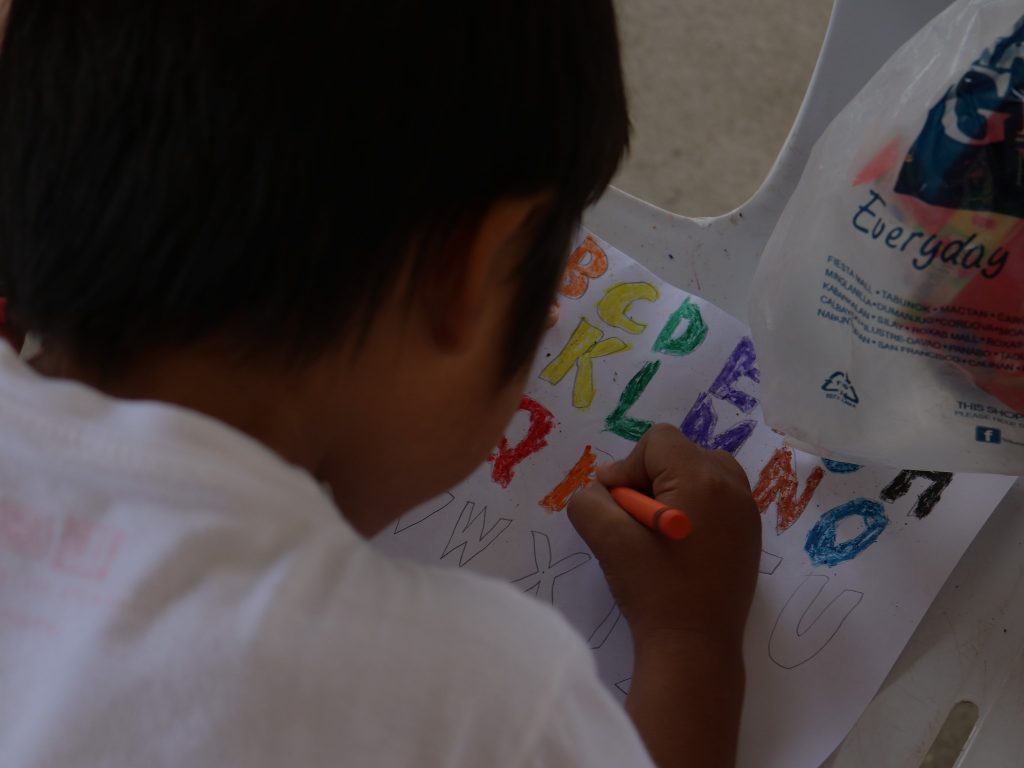
At the center of the club’s continuity is its commitment to sustainable and meaningful projects. One of its longest-running initiatives is ROTACART, a donation book drive that promotes literacy and ensures that students have access to essential school supplies.
The project has completed multiple successful runs and has earned recognition at district-level conferences.
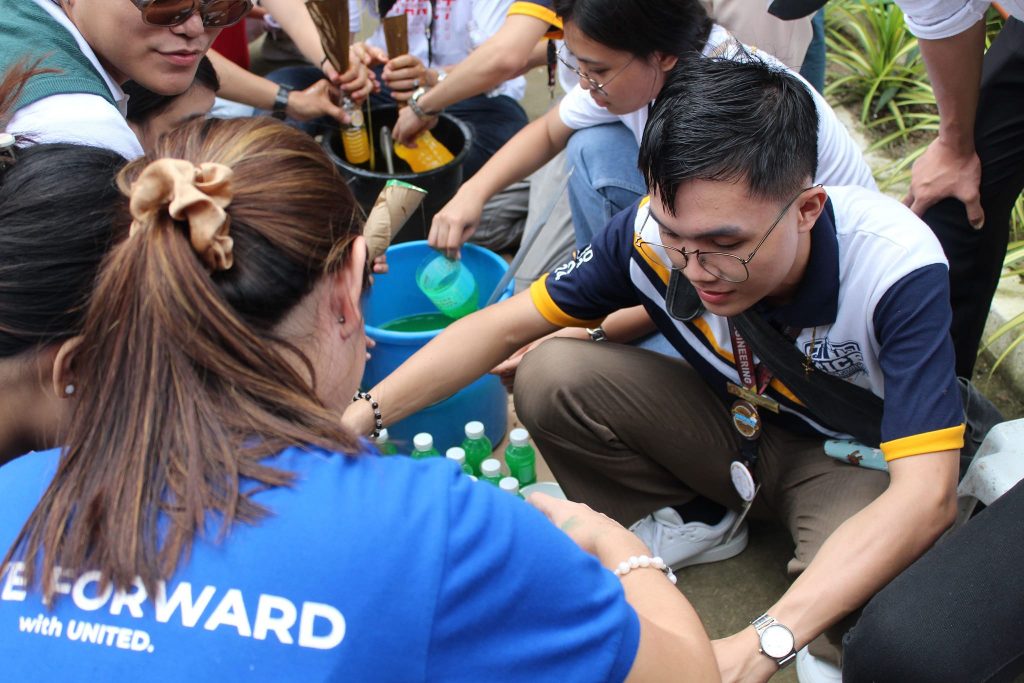
Another key initiative, Soap Up, focuses on skills development and sustainability. Through workshops, youth participants learn how to create their own dishwashing liquid, gaining practical knowledge that promotes environmental responsibility, self-reliance, and small-scale entrepreneurship.
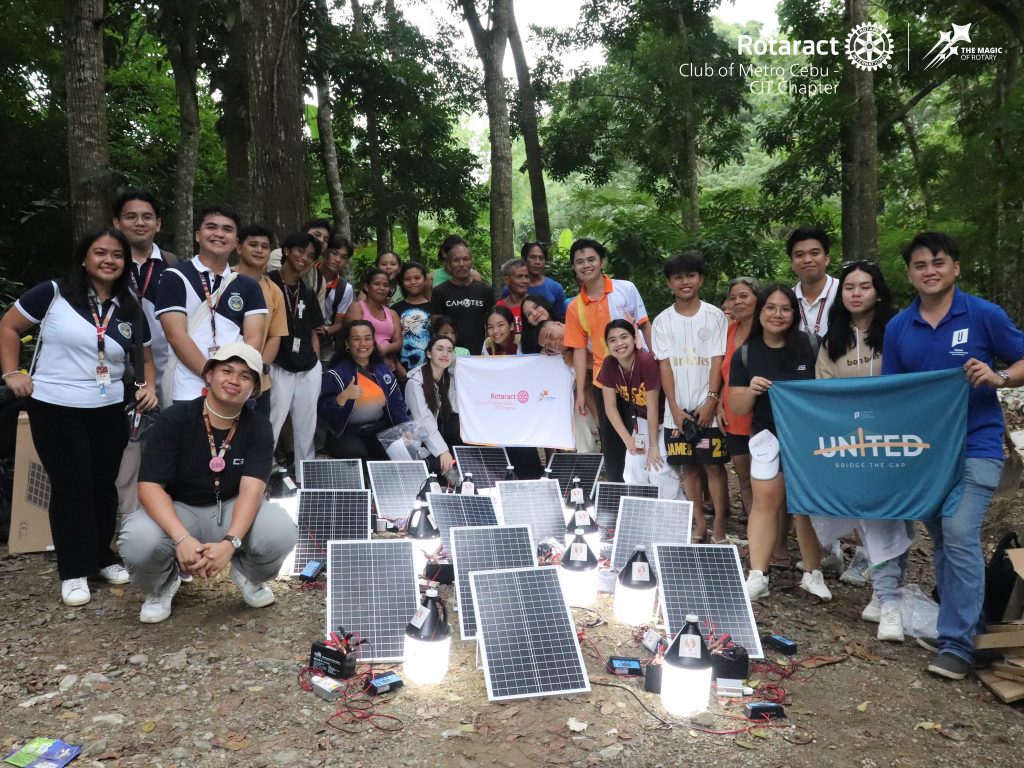
Perhaps one of the most impactful initiatives, Enario emphasized, is Project Solaris, which highlights the club’s commitment to addressing energy poverty in remote communities.
In Barangay Budlaan, the club installed solar panels in areas without electricity, alongside handmade lamps handcrafted by its members.
“Basically, I’d say na na-change namo ilang lives in a little way considering na naa na silay source of electricity. Although dili kay siya dako, I’m sure naka-make to siya og difference,” he said.
The project was later recognized as a Best Environmental Project and became a finalist in the Rotaract GEAR Awards for Best Rotaract Story.
Service That Goes Beyond the Four Walls
For student leaders like Enario, service was never something fully learned inside the classroom. As a student balancing academics and organizational work, he found that the true essence of volunteerism was not something heavily emphasized in formal education.
“Dili jud na siya i-highlight sa classroom unless Political Science ka na maka-talk about community service. But if you are enrolled in other programs, dili siya usually ma-discuss,” he shared. “The essence of volunteerism is really learned in the community.”
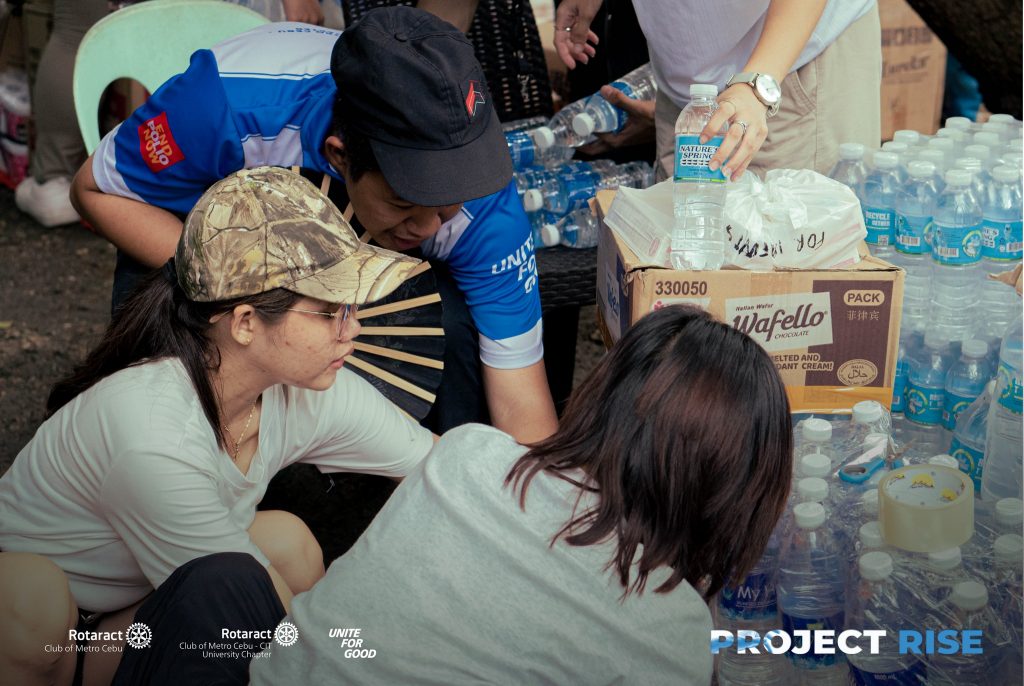
One of the clearest examples of this mindset is the club’s Project Rise, launched in response to a devastating 6.9 magnitude earthquake in Cebu that resulted in 68 deaths, 559 injuries, and 77,000 people displaced, mostly in Bogo City, Medellin, and San Remigio.
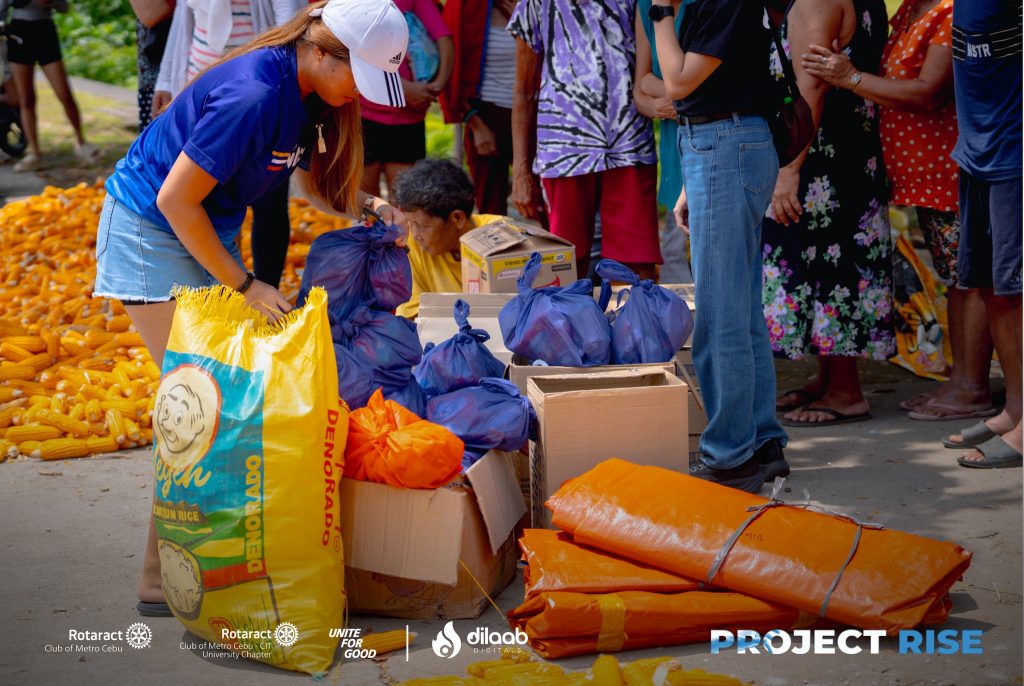
What started as a local initiative quickly expanded into a large-scale relief effort through collaboration.
“We started an initiative within the club together with our community-based na partner which is the Rotaract Club of Metro Cebu and kami, CIT,” Enario recalled. “Kami duha ka clubs kay nag-partner mi and we gathered more than 30 partners for our donation drive. Naka-gather siya og more than P200,000 cash inflows.”
The response unfolded in two waves, reaching affected communities in Bogo and other northern areas of Cebu.
The same model of collaboration was later applied during another large-scale disaster response effort through Project Rise 2.0, a donation drive for victims of Typhoon Tino that claimed hundreds of lives in the Philippines.
This time, the initiative united both internal university groups and external organizations under one coordinated effort, with them taking the lead.
“That was the moment I became very proud of being a Rotaractor,” Enario expressed.
More Than a Title
In the end, being the “oldest” is not what defines the Rotaract Club of Metro Cebu CIT–University Chapter.
“It’s not about who’s the oldest and who’s the youngest,” Enario reflected. “Basta lang we are united by a common denominator which is to serve the community. I think that’s what matters most.”
He added that titles, positions, ranks, and roles will eventually fade, but the impact you have on the community will remain.