
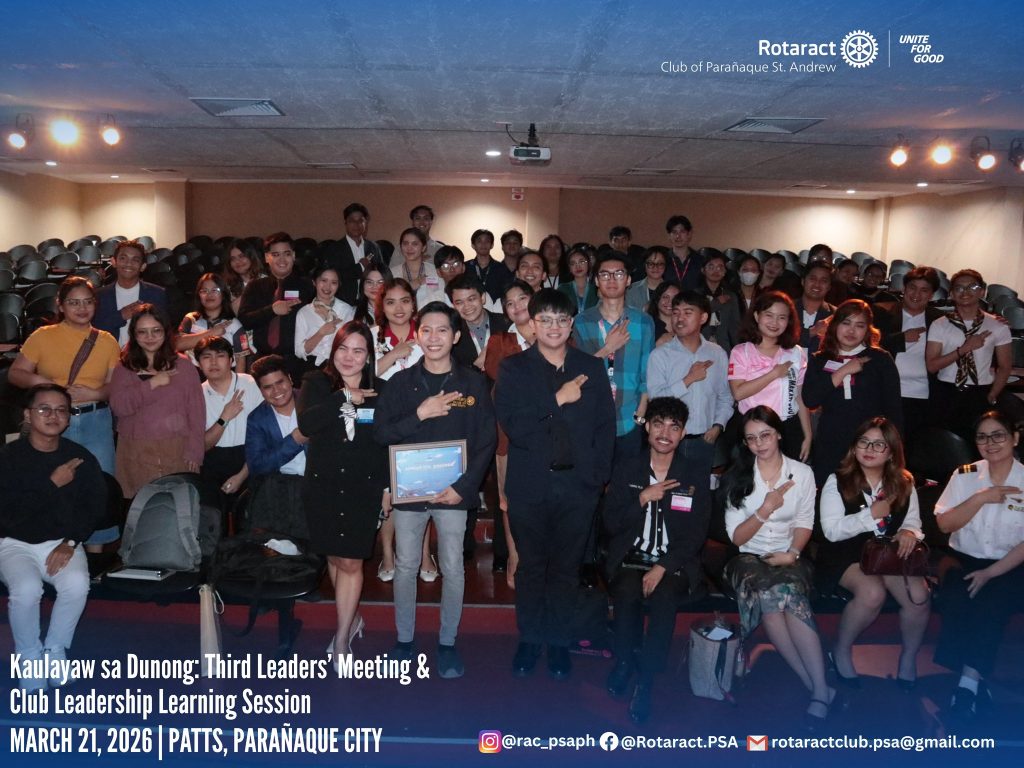
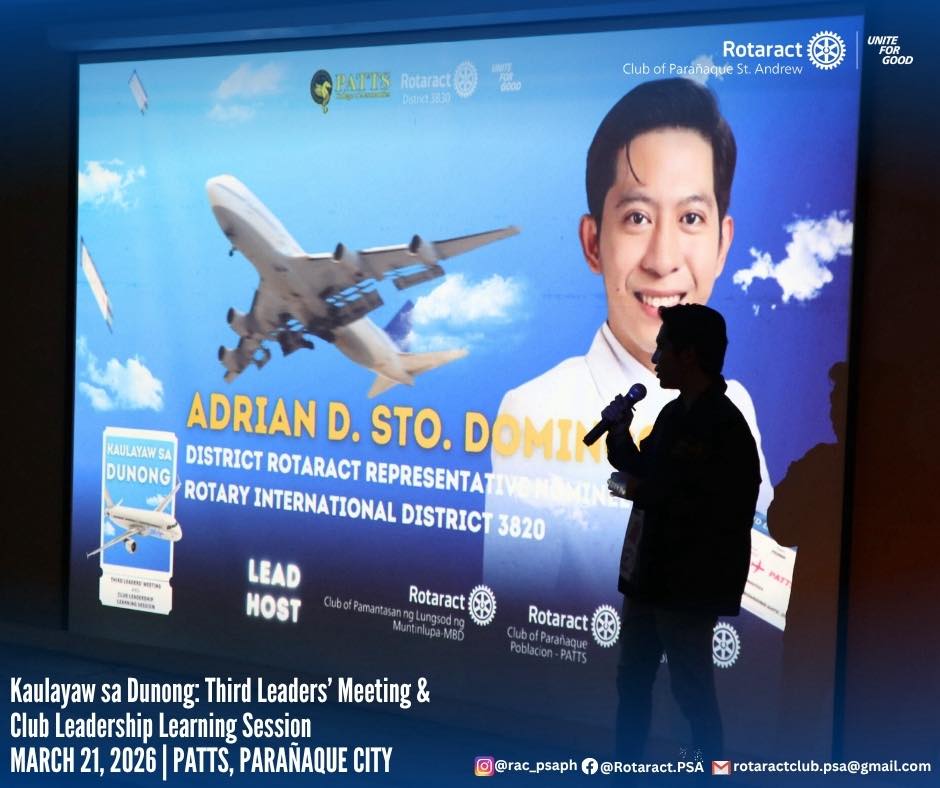
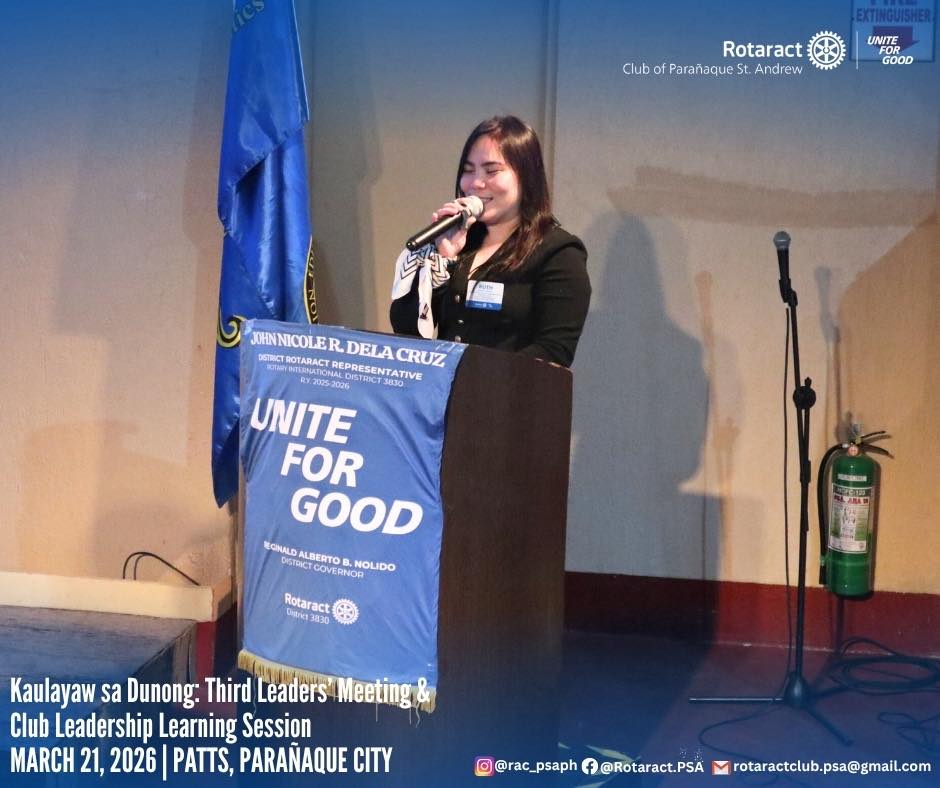
Stepping into the role of a resource speaker at the Rotaract Leadership Transition Seminar of the Rotaract Clubs of RI District 3830, held at PATTS College of Aeronautics, was both an honor and a moment of clarity.
That day was about sharing insights and was also an opportunity to listen, observe, and reflect on the real state of our Rotaract clubs. Beyond the energy, the passion, and the fellowship, there are truths we need to confront if we want our organizations to thrive.
Every Club Has Its Own Battles
One of the most important realizations is this: no club is exempt from struggle.
Some are strong in membership but weak in systems. Others are active in projects but lack sustainability. And some are simply trying to stay afloat. These realities point to one important need: honest assessment.
We cannot fix what we refuse to see.
Clubs must regularly assess their internal health, like membership engagement, leadership pipeline, project impact, and organizational structure. Growth begins with acknowledging where we are, not where we pretend to be.
Leadership Is Not Found, It Is Formed
A recurring concern raised during the seminar was the difficulty of finding the “next leader.”
But perhaps the problem is not the absence of leaders, but the lack of intentional formation.
Leadership in Rotaract should never be accidental. It must be cultivated. Presidents and current leaders must invest time in mentoring members, especially those who show potential but have yet to realize it. Exposure is key. Assign them roles. Let them lead small initiatives. Involve them in projects aligned with their interests.
When people find meaning in what they do, leadership naturally follows.
The Role of the Outgoing President Does Not End
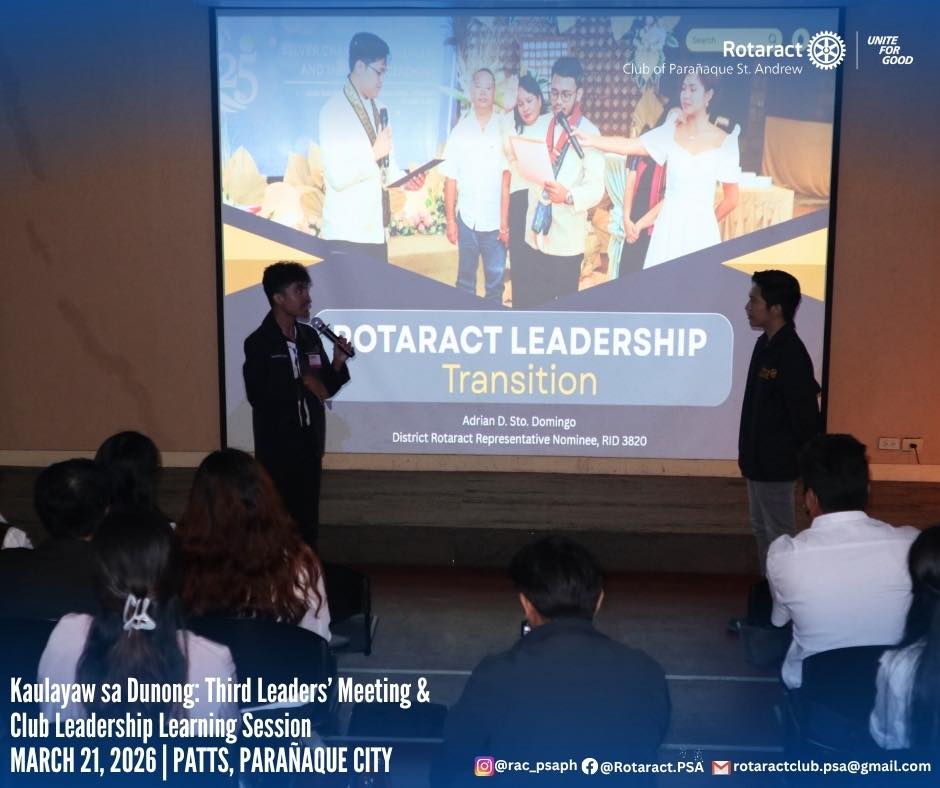
Leadership transition should not feel like a cliff, but it should feel like a bridge.
One powerful takeaway is the importance of giving outgoing presidents a continuing role, ideally as a club adviser. Their experience is not just valuable, but necessary. They carry institutional memory, lessons from failure, and insights that cannot be taught overnight.
More importantly, they can guide their successors—not to control, but to support; not to dictate, but to advise.
Continuity is what separates surviving clubs from sustainable ones.
Systems Create Stability
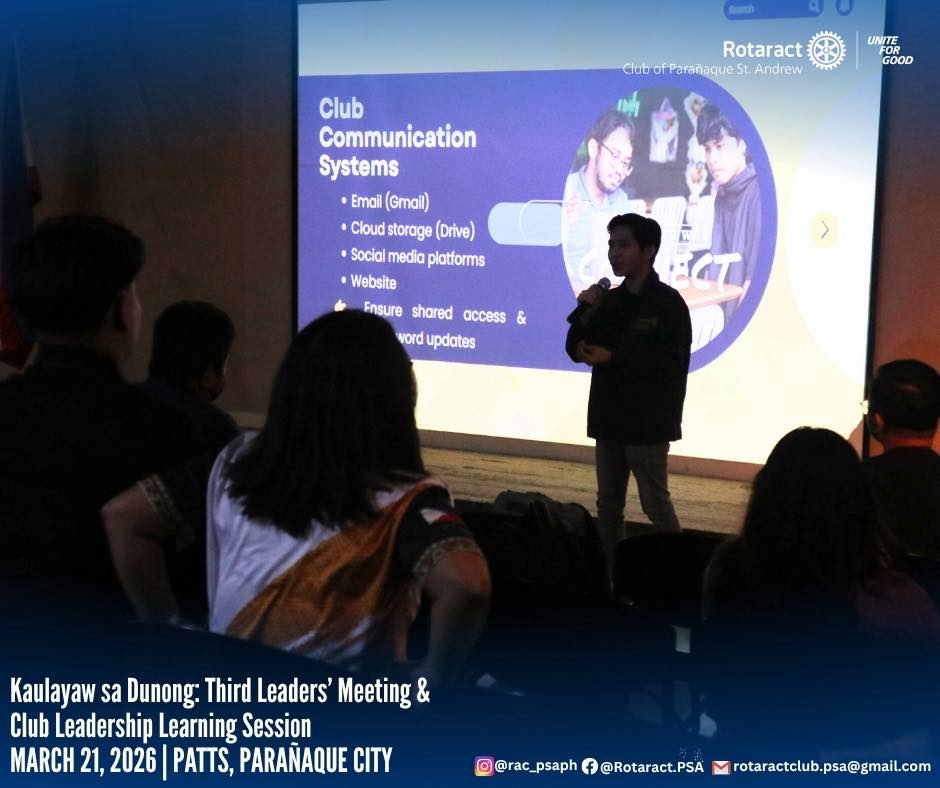
Another realization is the importance of structure, specifically the creation of clear and contextualized bylaws.
While templates from Rotary International provide a strong foundation, each club must define its own identity within that framework. Bylaws are not just documents; they are declarations of purpose, responsibility, and direction.
They answer important questions:
What do we stand for?
How do we operate?
What is expected from each member?
When these are clear, confusion is minimized, and accountability is strengthened.
No Club Grows Alone
Perhaps the most practical and strategic takeaway is the power of partnerships.
In a landscape where resources can be limited, collaboration becomes a necessity, not a luxury. Partnerships open doors to funding, manpower, expertise, and broader impact.
But more than that, partnerships build a sense of shared mission. They remind us that service is not a competition; it is a collective effort.
Whether with fellow Rotaract clubs, Rotary clubs, organizations, or communities, building strong partnerships ensures that no project stands alone.
Moving Forward
As I stepped down from the stage that day in Parañaque, I realized that the seminar was not just for the participants, but also for me.
It was a reminder that leadership is never a finished product. It evolves. It adapts. And most importantly, it listens.
Rotaract is full of potential. But potential alone is not enough. It requires structure, mentorship, continuity, and collaboration to truly make an impact.
And if there’s one thing I will carry forward, it is this:
Strong clubs are not built by chance. They are built by leaders who are willing to reflect, recalibrate, and rise… together.
More Recommended Reads
 To Excel as a Leader, DG Rudy of RID 3770 Emphasizes the Importance of Knowing Your “Why”
 From Rotaractor to Rotarian: Embracing Service, Fellowship, and Leadership
 Meet DRR Jessica Mitra, Leading District 3770 towards a Soaring Future
 Living the Rotary Life: PDG Jun Farcon Shares Advice to Rotaractors