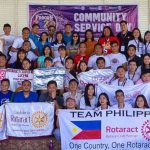
Last November 30 at 7:00 PM, the Rotaract Club of Cebu Fuente–University of San Carlos successfully conducted Polio Talks via Google Meet—an initiative aligned with the club’s ongoing End Polio Now Campaign (EPNC). Held amid calamities and relief efforts, Polio Talks reflected the resilience of service and the urgency of health advocacy.
While many believe that polio has long been eradicated, global data tells a different story. The remaining 0.1% of active cases continues to threaten vulnerable communities, proving that the fight is far from over. Polio Talks aimed to address this gap by empowering participants with knowledge and mobilizing them toward long-term collective action.
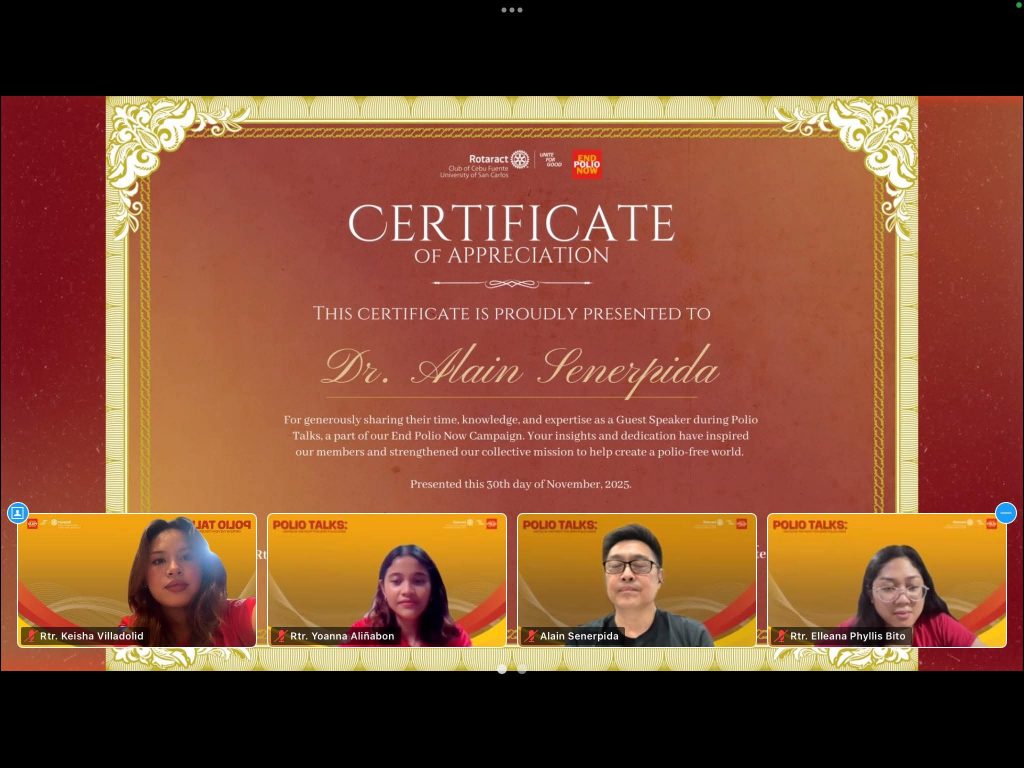
The seminar featured two distinguished speakers from the club’s mother club: PDG Mary Anne A. Solomon and Dr. Alain Senerpida, both of whom are actively involved in Rotary’s humanitarian efforts and End Polio Now initiatives. Dr. Senerpida opened the program with his talk, “Why Polio Matters: The Final 0.1%,” providing an accessible medical overview of polio—its causes, symptoms, modes of transmission, and preventive measures. His discussion emphasized that vaccines remain the most effective shield against polio and that continued awareness helps protect future generations.
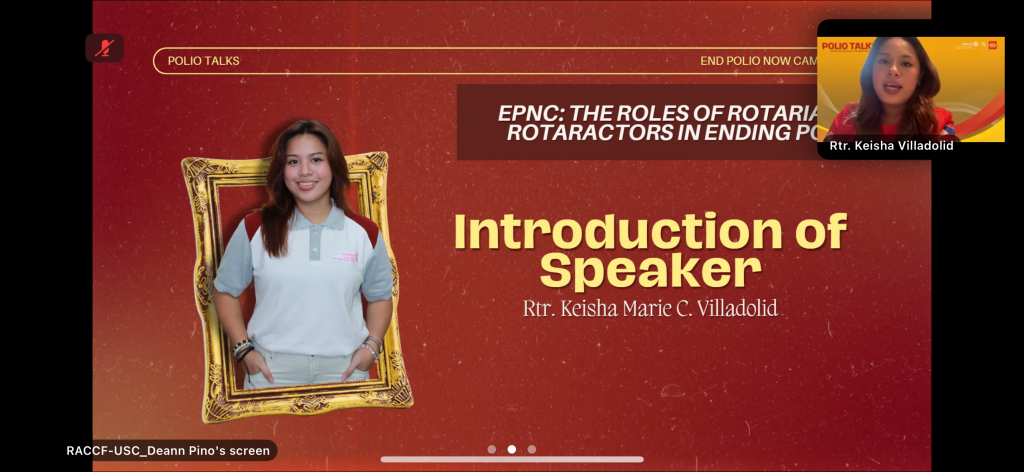
Meanwhile, PDG Mary Anne Solomon delivered “EPNC: The Roles of Rotarians and Rotaractors in Ending Polio,” highlighting Rotary’s historical leadership in reducing polio cases worldwide. Beyond presenting data, she encouraged both Rotarians and Rotaractors to remain steadfast, noting that advocacy and fundraising are vital in sustaining vaccine distribution, improving research, and strengthening community education.
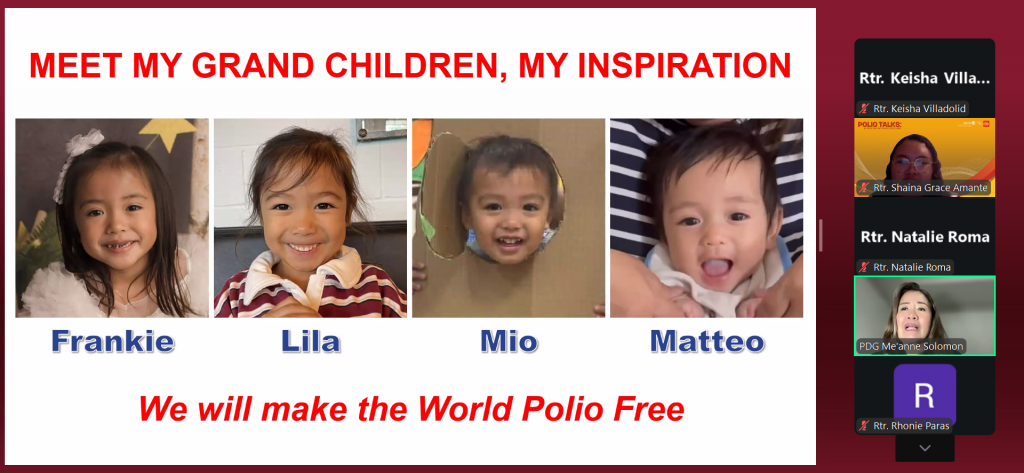
To reinforce learning, participants engaged in a brief quiz on polio facts, followed by a presentation by TRF Chair Shaina Grace Amante on the club’s past and upcoming EPNC activities, including projects planned for 2026.
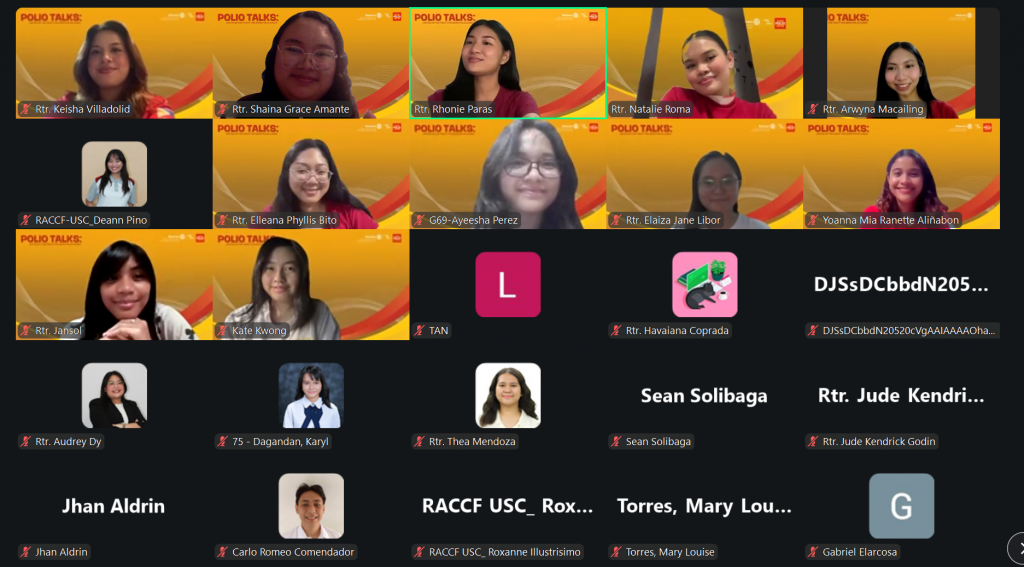
As the world inches closer to becoming polio-free, Polio Talks serves as a reminder that awareness fuels advocacy, and advocacy fuels change. Ending polio is not only a medical mission—it is a humanitarian responsibility. Together, we can end polio, one conversation and one step at a time.